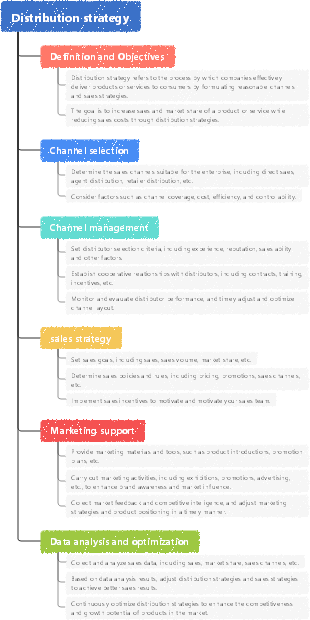
MindMap Gallery Distribution strategy
This is a mind map about distribution strategy. It tells the relevant stories of distribution strategy. If you are interested in the story of distribution strategy, you are welcome to collect and like this mind map~
Edited at 2021-08-08 21:27:19Avatar 3 centers on the Sully family, showcasing the internal rift caused by the sacrifice of their eldest son, and their alliance with other tribes on Pandora against the external conflict of the Ashbringers, who adhere to the philosophy of fire and are allied with humans. It explores the grand themes of family, faith, and survival.

This article discusses the Easter eggs and homages in Zootopia 2 that you may have discovered. The main content includes: character and archetype Easter eggs, cinematic universe crossover Easter eggs, animal ecology and behavior references, symbol and metaphor Easter eggs, social satire and brand allusions, and emotional storylines and sequel foreshadowing.
[Zootopia Character Relationship Chart] The idealistic rabbit police officer Judy and the cynical fox conman Nick form a charmingly contrasting duo, rising from street hustlers to become Zootopia police officers!
Avatar 3 centers on the Sully family, showcasing the internal rift caused by the sacrifice of their eldest son, and their alliance with other tribes on Pandora against the external conflict of the Ashbringers, who adhere to the philosophy of fire and are allied with humans. It explores the grand themes of family, faith, and survival.
This article discusses the Easter eggs and homages in Zootopia 2 that you may have discovered. The main content includes: character and archetype Easter eggs, cinematic universe crossover Easter eggs, animal ecology and behavior references, symbol and metaphor Easter eggs, social satire and brand allusions, and emotional storylines and sequel foreshadowing.
[Zootopia Character Relationship Chart] The idealistic rabbit police officer Judy and the cynical fox conman Nick form a charmingly contrasting duo, rising from street hustlers to become Zootopia police officers!
Distribution strategy
Definition and meaning
Distribution strategy refers to a series of strategies and measures adopted by enterprises to promote and sell products, with the purpose of achieving sales targets and expanding market share.
Channel selection
Based on product characteristics and target market, select appropriate channels to ensure smooth introduction of products to the market.
Example: Choose offline channels, such as retail stores and supermarkets; choose online channels, such as e-commerce platforms and social media.
Channel cooperation
Establish good relationships with channel partners to jointly promote product sales and achieve mutual benefit and win-win results.
Example: Sign a cooperation agreement with a retailer to provide market support and sales training; cooperate with an e-commerce platform to jointly conduct promotional activities.
Pricing Strategy
Develop appropriate pricing strategies to attract consumers and coordinate pricing with channel partners.
Example: Adopt a market-oriented pricing strategy and determine product selling prices based on competitor prices; discuss pricing strategies with channel partners to ensure consistent prices.
Logistics
Ensure that products can be delivered to consumers in time and provide good logistics services.
Example: Establish an efficient logistics network to ensure products can be delivered quickly; cooperate with logistics companies to provide cargo tracking and delivery services.
Marketing
Increase product awareness and sales through marketing activities.
Examples: Conduct advertising, such as TV commercials and outdoor advertising; participate in industry exhibitions to demonstrate product advantages.
After-sales service
Provide comprehensive after-sales service to increase customer satisfaction and loyalty.
Example: Establish an after-sales service hotline to answer customer questions; provide product warranty and return and exchange policies.
Sales data analysis
Analyze sales data and adjust distribution strategies in a timely manner to achieve better sales results.
Example: Collect sales data, such as sales volume, sales channels, customer feedback; analyze the data, identify potential problems and take corresponding measures.
market competition strategy
Develop strategies against competitors to maintain a competitive advantage.
Example: Conduct competitor analysis to understand their product features and sales strategies; develop differentiated competitive strategies to highlight product uniqueness.
Product improvements
Based on market demand and customer feedback, we continuously improve products and enhance product competitiveness.
Example: Conduct regular market research to understand consumer needs; improve product design and functionality based on feedback.
international distribution strategy
For international markets, develop distribution strategies adapted to different countries and regions.
Example: Understand the market characteristics of various countries and select international channels; consider cultural differences and laws and regulations to adjust distribution strategies.
Marketing staff training
Train the sales team to improve professional capabilities and sales skills.
Example: Conduct sales training courses to provide product knowledge and sales skills training; share successful cases and experiences.
Data protection and compliance
Ensure data protection and compliance during distribution to prevent information leaks and breaches.
Example: Strengthen data protection measures, such as data encryption and access control; comply with relevant laws and regulations, such as the Personal Information Protection Law.
Outcome Assessment and Adjustment
Regularly evaluate the effectiveness of distribution strategies and adjust strategies based on evaluation results to achieve better results.
Example: Set evaluation indicators, such as sales and market share; analyze evaluation results, identify problems and take improvement measures.