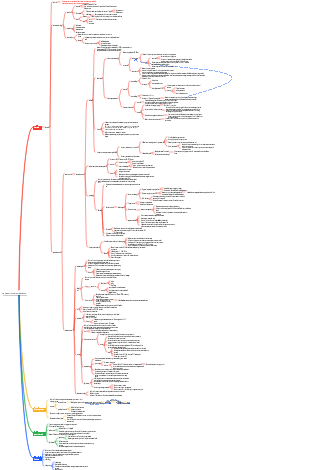
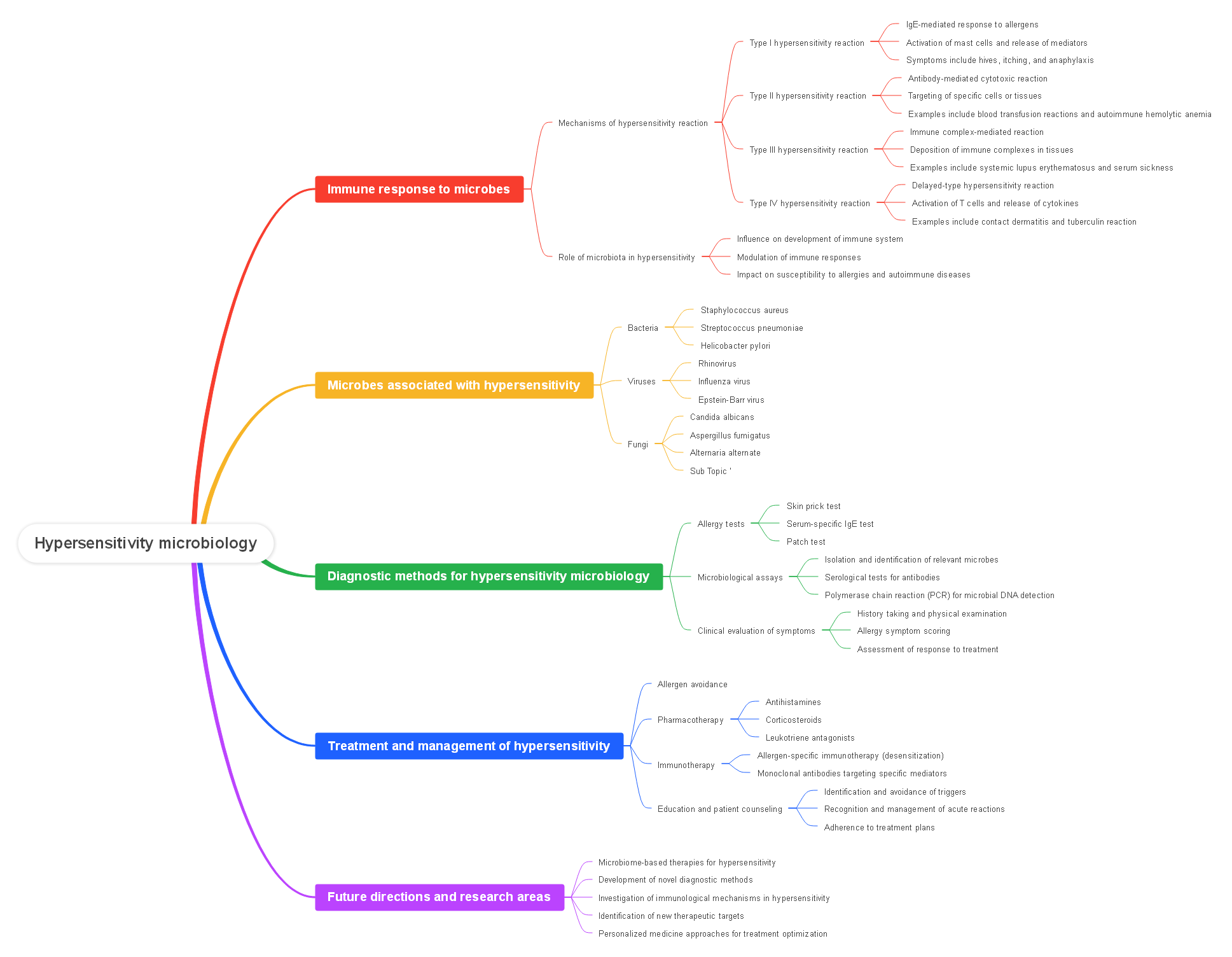
This is a mind map about viruses. The main contents include: basic methods of virus research, proliferation, characteristics and definitions, structure or chemical composition.
Viral DNA and RNA both have single-stranded and double-stranded
dsDNA
Most DNA viruses
ssDNA
E. coli X174 phage
dsRNA
animal reovirus
ssRNA
Most plant viruses
-ssRNA
flu virus
The single strand of nucleic acid whose base sequence is consistent with that of mRNA is designated as the positive strand ( )
The single strand of nucleic acid whose base sequence is complementary to that of mRNA is designated as the negative strand (-)
protein
Some viruses encode only one protein, while most viruses encode multiple proteins.
Mainly plays a role in structuring the virus and in the process of virus proliferation: 1. Protecting nucleic acids and maintaining the integrity of the virus particle structure 2. Participating in the adsorption of viruses 3. Participating in the synthesis of viral macromolecules 4. Destroying host cell walls and cell membranes
other ingredients
Characteristics and Definition
Features
The shape is tiny and can be observed at the nanometer level using an electron microscope.
Cellless structures, usually containing only one type of nucleic acid, DNA or RNA, some simple viruses are composed only of nucleic acid and protein.
Parasitism within living cells
host specific
Infectious
Exists in a macromolecular state outside cells and does not show life phenomena
Generally not sensitive to antibiotics, but sensitive to interferon.
definition
Viruses contain a type of nucleic acid, DNA or RNA, and are obligately parasitic in living cells. They can only rely on the metabolic system of the host cell to complete nucleic acid replication and protein synthesis. After assembly, they reproduce and can be used as inanimate macromolecules outside the cell. non-cellular microorganisms that exist in a state.
proliferation
Also known as reset
process
Adsorption
Intrusion and shelling
Biosynthesis
Nucleic acid replication, transcription, and protein synthesis Central dogma
assembly
freed
Phage type
virulent bacteriophage
temperate bacteriophage
lysogenic bacteria
Basic methods of virus research
binary culture method
The culture method mainly depends on the host range, tissue tropism and other factors of the virus.
identification
plaque
Plaques (animal viruses) and foci of infection (tumor viruses)
Necrotic spots (dead spots)
Virus interference phenomenon
When two viruses infect the same host cell at the same time or one after another, one virus inhibits the proliferation of the other virus.
lesion effect
cell culture specimens
inclusion bodies
other
PCR: Nucleic acid detection of new coronavirus
Antigen-antibody specific reaction
Quantitative
Infectious unit of virus Potency or virulence of a virus LD50 Infectious dose